

Crypto Mining 101: Everything You Need to Know
So far, 19 million bitcoins have been mined. Only 2 million are left to mine, with a total cap of 21 million coins. This shows how important crypto mining is in the world of cryptocurrencies. It’s the process of checking transactions on a blockchain and adding them to a public record. It also brings new coins into the market, making it key to the crypto world.
Introduction to Crypto Mining
Crypto mining needs a lot of computer power and energy. This makes it very expensive to try to cheat the system. The Bitcoin network uses Proof-of-Work to stay safe. Miners solve hard math problems to do this.
As the mining world grows, talks about the future of mining are getting louder. People are debating between Proof-of-Work and Proof-of-Stake.
Key Takeaways
- Crypto mining checks transactions on a blockchain and adds them to a public record.
- There are 21 million Bitcoin coins in total, with about 19 million already mined.
- Crypto mining is very energy-intensive and expensive.
- The Bitcoin network uses Proof-of-Work to stay safe.
- The mining world is changing, with debates on PoW and PoS.
- Crypto mining is vital for introducing new coins into the market.
- Crypto mining can be profitable, but it also has environmental concerns.
What is Crypto Mining?
Crypto mining, also known as digital mining, is the process of checking transactions on a blockchain network. It involves solving complex puzzles to validate transactions and create new blocks. Powerful computers generate over 1 quintillion random codes per second, making this possible.
The concept of proof of work is used by blockchains like Bitcoin. It involves miners competing to solve puzzles for rewards. This secures the network and verifies transactions. Mining rewards include new coins and transaction fees, but Bitcoin plans to reduce this incentive.
A key part of crypto mining is mining pools. These allow miners to work together and increase their chances of earning rewards. In fact, mining pools account for over 70% of Bitcoin mining. The average reward for mining a Bitcoin block is currently 6.25 BTC, worth about $150,000 at a Bitcoin price of $24,000.
The history of crypto mining is fascinating. The first Bitcoin block was mined in 2009. Since then, the industry has grown a lot. The cryptocurrency market capitalization reached about $2.5 trillion in 2021. Understanding crypto mining is key to grasping the blockchain ecosystem.
How Does Crypto Mining Work?
Crypto mining is a complex process. It involves solving mathematical equations to validate transactions on a blockchain network. This requires a lot of computational power, which is provided by specialized
The mining process is a race to solve a mathematical puzzle. The first miner to solve it gets to add a new block of transactions to the blockchain. This is key for securing the network and verifying transactions. GPU mining and ASIC mining are two popular methods, each with its own pros and cons.
Some key aspects of crypto mining include:
- High computational power requirements
- Specialized crypto hardware, such as GPUs and ASICs
- Importance of blockchain technology in securing the network
In summary, crypto mining is vital for the security and integrity of blockchain networks. By understanding how it works, including the role of GPU mining and ASIC mining, we can better appreciate its complexities and challenges.
Types of Crypto Mining
Crypto mining has grown, with many types now available. Each type’s profitability depends on hardware, electricity costs, and the cryptocurrency mined. Choosing the right type can greatly affect mining success and efficiency.
There are CPU, GPU, and ASIC mining types. Each has its own pros and cons. For example, CPU mining was popular but now less profitable. GPU mining is favored for its high hash rate and cost-effectiveness.
ASIC mining is the most efficient and profitable. ASIC miners are made for specific cryptocurrencies like Bitcoin. They are fast but expensive, affecting new miners’ entry.
The mining type chosen impacts the environment. GPU mining systems use a lot of energy. FPGAs, however, are more energy-efficient and faster than GPUs. As mining demand grows, finding eco-friendly options is crucial.
The Role of Miners in Cryptocurrency Networks
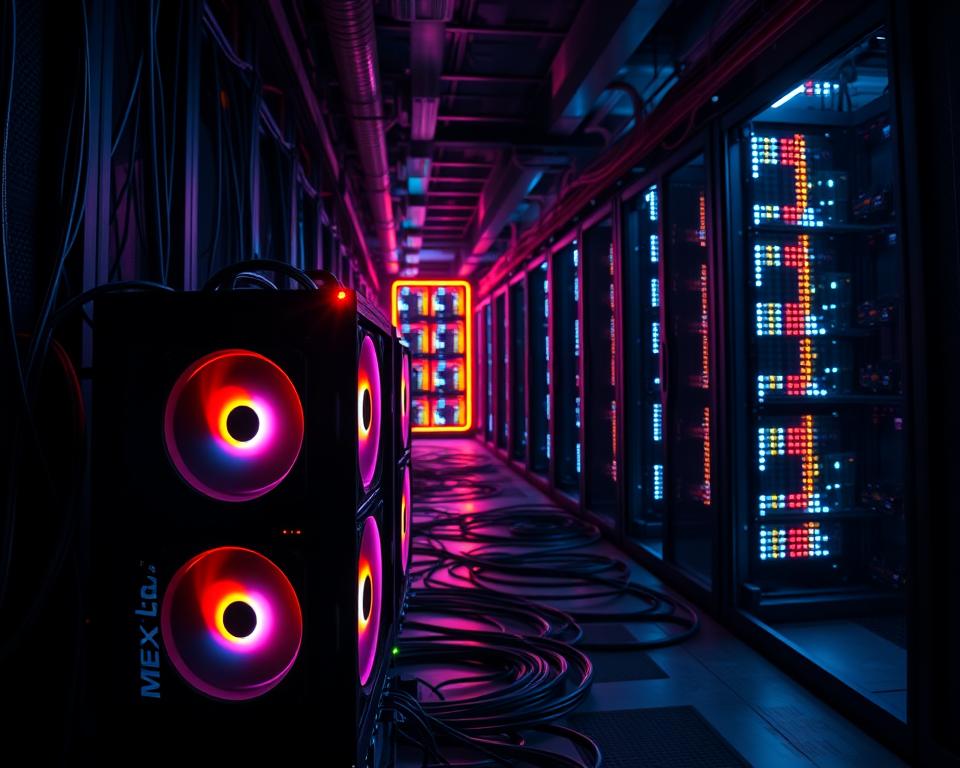
Miners are key to keeping cryptocurrency networks safe and stable. They check transactions, stop double spending, and keep the network running smoothly. Mining is hard work that needs lots of energy consumption.
This has led to worries about the environmental impact of mining. It also causes a lot of e-waste generation.
Miners get cryptocurrency as a thank you for keeping the network safe. But mining uses a lot of energy, which raises costs. Also, rules about mining are changing in many places.
- Validating transactions and preventing double spending
- Maintaining network security and integrity
- Competing to add new blocks to the blockchain
In summary, miners are vital for cryptocurrency networks. But their work also harms the environment and uses a lot of energy. As the crypto world grows, we need to find ways to make mining greener and cut down on e-waste generation.
Mining Difficulty and Hash Rate
Crypto mining is about solving complex math problems to keep the network safe. The mining difficulty changes every two weeks. This keeps the block generation time around 10 minutes. It’s key to keeping the network secure and stopping attacks.
The hash rate is important in crypto mining. It’s measured in megahashes per second (MH/s) or gigahashes per second (GH/s). A higher hash rate means solving math problems faster but uses more energy and costs more.
Every blockchain’s hash rate affects its mining difficulty. This, in turn, impacts how long it takes to solve new blocks.
Some top mining equipment and their hash rates are:
- ASIC Antminer KS5 Pro: 21,000 Gh/s
- ASIC iPollo G1: 36 Gps
- ASIC Antminer K7: 63,500 Gh/s
The mining difficulty and hash rate greatly affect mining profits. Higher mining difficulty means lower earnings. But, a higher hash rate means more competition for rewards. Understanding these factors is crucial for making smart mining decisions.
Hardware Required for Crypto Mining
Crypto mining needs special hardware to solve tough math problems. The cost varies from a few hundred to several thousand dollars. Efficiency is crucial because it affects how much money you can make.
Choosing the right mining rigs is key. GPU mining works well for some coins, while ASIC miners are better for Bitcoin. The choice depends on the coin you want to mine and your budget.
Some top mining rigs include:
- ASIC miners like the SEALMINER A2 and KS5 Pro for Bitcoin mining
- GPUs like the AMD RX 7900 XT, Nvidia 3090 Ti, and Nvidia 4090 for mining other cryptocurrencies
It’s also important to think about the total cost, including energy. Saving on power and improving hash rate can make mining more efficient and cheaper.
Software Needed for Crypto Mining
Crypto mining needs special software to manage and watch the mining process. The right software can make mining better, use less energy, and make more money. It’s key to pick software that fits the mining hardware and your skill level.
Popular mining software includes EasyMiner, Awesome Miner, and Kryptex. These tools have easy-to-use interfaces, let you manage remotely, and offer cool features like automatic updates and live monitoring. Using software that matches your hardware can boost performance by up to 25%.
Modern mining software also cuts down on electricity use by up to 15%. This is great for miners who want to be kinder to the environment. With the right software, miners can cut costs, work more efficiently, and make more money.
The right software is crucial for digital mining. Choosing a trusted mining software ensures a smooth and profitable mining journey. Whether you’re new or experienced, there’s a software out there for you.
When picking mining software, look for these key features:
- Compatibility with mining hardware
- User-friendly interface
- Remote management capabilities
- Automatic updates and real-time monitoring
- Energy efficiency and cost savings
By focusing on these points and picking the right software, miners can improve their work, save money, and boost their profits in the crypto mining world.
Mining Pools vs. Solo Mining
Crypto mining can be done in two ways: mining pools or solo mining. Mining pools offer steady rewards. Miners get a share of the block reward when the pool mines a block. This makes mining income more stable than solo mining.
Solo miners have a lower chance of finding blocks because they have less power. Solo mining needs expensive hardware, leading to high costs. The chance of finding a block depends on the miner’s hash rate compared to the network’s.
Advantages of Mining Pools
- Regular and predictable rewards
- Reduced variability in mining income
- Increased mining profitability
Disadvantages of Solo Mining
- Reduced mining profitability
- Increased risk due to lower hashing power
- Higher hardware and operational costs
In conclusion, mining pools and solo mining have their pros and cons. Miners need to weigh their options. They should think about mining difficulty, hash rate, and costs to choose the best method for their crypto mining.
Environmental Impact of Crypto Mining
The environmental impact of crypto mining is a big concern today. Mining operations use a lot of energy, leading to a large carbon footprint. This is similar to burning 84 billion pounds of coal or running 190 natural gas plants. It shows the need for green alternatives in the crypto mining world.
Some important stats about crypto mining’s environmental impact are:
- Global Bitcoin mining network used 173.42 Terawatt hours of electricity in 2020–2021.
- The carbon footprint of Bitcoin mining is like burning 84 billion pounds of coal or running 190 natural gas plants.
- To balance Bitcoin’s carbon footprint, we’d need to plant 3.9 billion trees. That’s as big as the Netherlands, Switzerland, Denmark, or 7% of the Amazon rainforest.
Switching to renewable energy for mining could cut down emissions from Bitcoin mining a lot. A carbon tax in the crypto world could also help lower emissions. As the mining industry grows, finding ways to use less energy and reduce waste is crucial.
Cryptocurrency Regulations and Mining
Cryptocurrency laws and mining rules differ worldwide. In the U.S., mining is mostly allowed at the federal level. But, states have their own rules, especially about the environment and energy use. For example, Arkansas has laws to guide mining and protect miners from unfair taxes.
Other countries have their own rules too. The European Commission suggests cutting tax breaks for miners to lower energy use. Kazakhstan is popular for miners because of its cheap electricity and clear rules. Russia made mining legal in November 2024, with rules from the Ministry of Digital Development.
When it comes to
- Compliance with local laws and regulations
- Obtaining necessary permits and licenses
- Reporting and paying taxes on mining operations
- Implementing noise-reducing techniques and environmental measures
It’s key for miners to know these rules. By following them, miners can run their operations well. This helps the whole crypto industry grow.
Profitability of Crypto Mining
Crypto mining’s profitability depends on several things. These include the cost of equipment, electricity, mining difficulty, and the cryptocurrency’s market value. The price of mining hardware, like ASIC miners, can vary from $540 to $14,521. On average, electricity costs about $0.13 per kW/h.
To figure out mining profitability, you need to look at these factors. For instance, mining Bitcoin can be profitable. But, how much you can make depends on your equipment, electricity costs, and Bitcoin’s current price. Profitability can vary greatly based on the cryptocurrency’s market price. When prices are higher, you can earn more after covering your costs.
- Bitcoin mining profitability is influenced by equipment costs, electricity costs, mining difficulty, and Bitcoin’s market value.
- The average electricity cost used for calculations is $0.13 per kW/h.
- Miners in a pool can expect to earn a few hundred dollars monthly, but this is contingent on various factors, including expenses.
In conclusion, crypto mining’s profitability depends on many factors. Miners need to think about these carefully to see if mining is profitable for them. By understanding what affects mining profitability, miners can make better choices. This helps them earn more from their mining efforts.
Getting Started with Crypto Mining
Starting your crypto mining journey can seem tough, but it’s worth it. This guide will help you understand the basics and get started. Crypto mining means solving hard math problems to keep the network safe and secure.
Choosing the right tools is key. ASIC devices are the most powerful but also the most expensive, starting at $1,500. GPUs offer good power but cost a lot upfront. CPUs are not as powerful and don’t make much money.
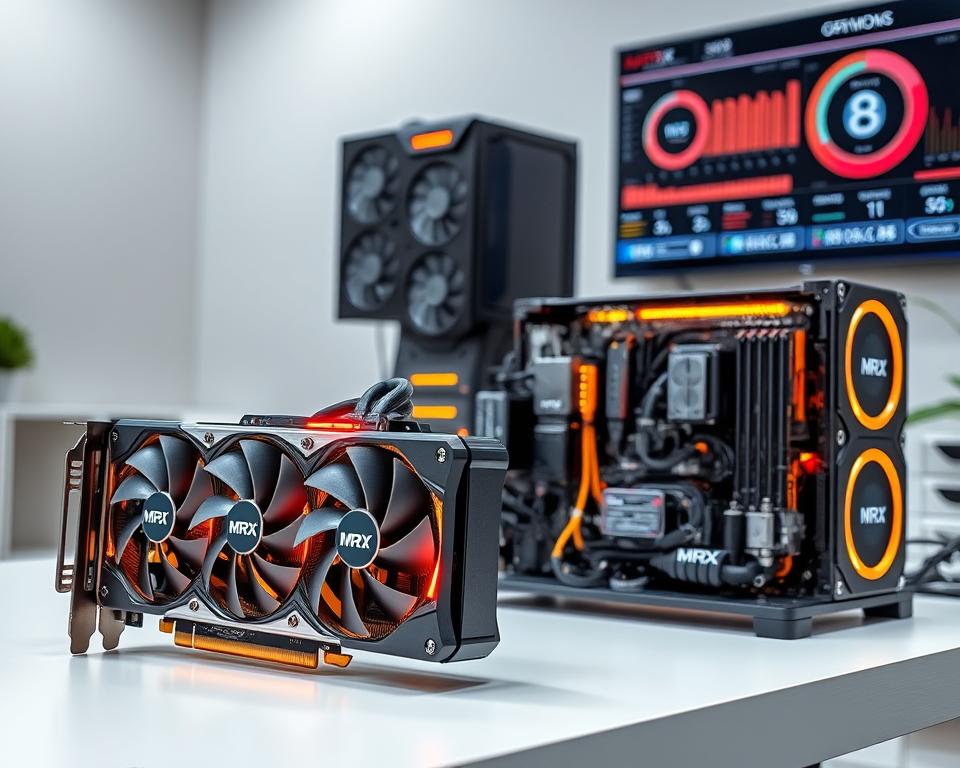
- Hardware costs: Prices vary for ASIC miners, GPU rigs, and CPU equipment.
- Electricity costs: Your mining profits can be affected by how much electricity costs in your area.
- Mining pools: Joining a pool can help you earn more by sharing your resources.
By following this guide, you can make smart choices for your crypto mining journey. Keep learning about the latest in crypto mining to have a successful and profitable experience.
The Future of Crypto Mining
The crypto world is always changing, and mining is no exception. Experts see many trends and innovations coming. These will change how mining works. Expect to see more use of renewable energy, better mining tech, and new ways to agree on transactions.
Miners are now using green energy like solar and water power. This makes mining better for the planet and more competitive. New mining rigs with advanced chips will also make mining more efficient and profitable.
Big changes are coming with new ways to agree on transactions, like Proof of Stake (PoS). This means less energy use and a new role for miners. It opens up new chances for those ready to change.
Miners need to keep up with new rules and laws. Governments want mining to be greener. This creates chances for miners to help make the world more sustainable.
FAQ
What is crypto mining?
Crypto mining is the process of checking and adding transactions to the blockchain. This digital ledger keeps track of all cryptocurrency activity. Miners get cryptocurrency for keeping the network running.
How does crypto mining work?
Miners solve complex math problems to validate transactions. They use special hardware like GPUs or ASICs. The first to solve it gets new cryptocurrency.
What are the different types of crypto mining?
There are CPU, GPU, and ASIC mining. CPU mining uses the computer’s CPU. GPU mining uses the graphics card for more power. ASIC mining uses special hardware for mining.
What is the role of miners in cryptocurrency networks?
Miners validate transactions and secure the network. They solve math problems to add new blocks to the blockchain. They get new cryptocurrency as a reward.
How does mining difficulty and hash rate affect crypto mining?
Mining difficulty is how hard the math problems are. It gets harder as more miners join. Hash rate is the computing power of miners. It affects their chances of solving a block.
What hardware and software is needed for crypto mining?
You need special hardware like GPUs or ASICs. You also need mining software. The choice depends on the cryptocurrency, mining strategy, and budget.
What are the advantages and disadvantages of mining pools vs. solo mining?
Mining pools share rewards, leading to stable earnings. Solo mining offers bigger rewards but is riskier. The choice depends on resources, risk, and goals.
What is the environmental impact of crypto mining?
Crypto mining uses a lot of energy. This has environmental concerns. Using renewable energy is a solution.
How do regulations affect crypto mining?
Regulations vary by country. In the U.S., there are discussions on taxes, energy use, and the environment. Miners must follow these rules.
How can I calculate the profitability of crypto mining?
You need to consider hardware costs, electricity, mining difficulty, hash rate, and cryptocurrency prices. Analyzing these helps determine if mining is profitable.
How can I get started with crypto mining as a beginner?
Start by choosing the right hardware and software. Set up a secure mining rig. Join a mining pool if you want. Monitor your performance and avoid common mistakes.
Leave a Reply